
01
★★★★★
“It was my first visit, and the staff were incredibly friendly. The clinic was clean, and the treatment was carried out with care and attention. I was very satisfied with the experience.”
Angela Park
Google Review
G

An individualized approach to rolling acne scars focused on understanding contour pattern, skin texture and the areas of concern before planning appropriate acne scar care.
Rolling acne scars are rolling contours that can create visible changes in skin texture after acne has healed. At JRYN, treatment planning begins with understanding the scar pattern, skin texture, skin condition and areas of concern before creating an individualized acne scar care plan.
Acne scar care centered on scar type, distribution, depth and skin condition.
Rolling acne scars are depressed acne scars with wider, defined edges that can make the skin surface look uneven. Their appearance can vary by depth, number, location and surrounding skin texture.
Effective scar treatment planning starts with a careful assessment rather than applying the same approach to every patient. Scar pattern, depth, texture, skin condition and previous acne-scar treatments can all be considered when creating an individualized treatment plan.
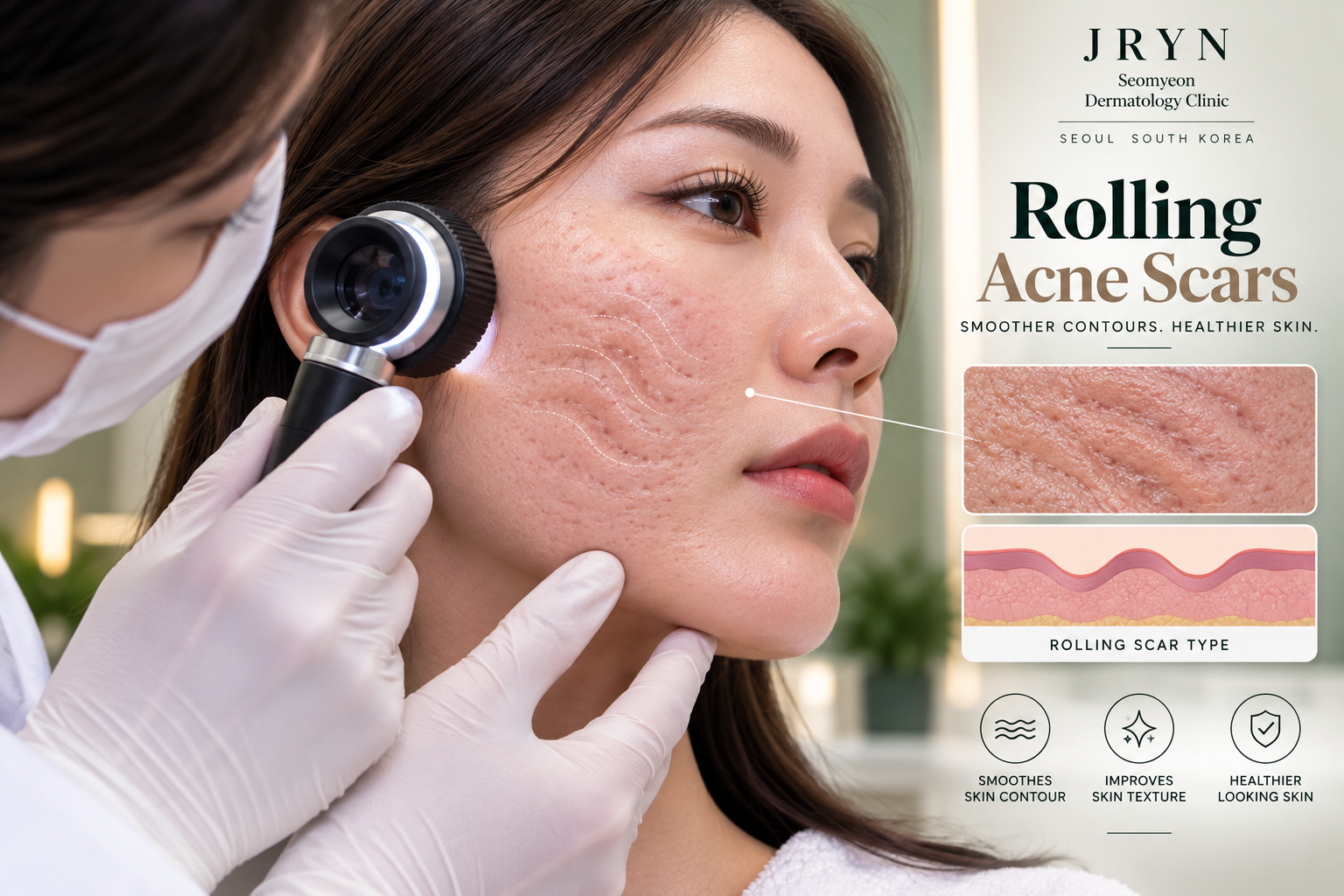
Rolling scars can vary in width, depth, distribution and visibility depending on lighting and surrounding skin texture. A scar assessment helps identify the main texture concerns and provides a more appropriate foundation for treatment planning.
The areas where rolling scars appear and their distribution can help guide treatment planning.
The visible depth and shape of depressed scars may be considered when assessing the skin.
The surrounding texture and surface unevenness can influence the treatment approach.
Overall skin condition and sensitivity are considered when planning appropriate acne-scar-focused care.
Discuss the scar history, pattern and areas of texture that you want to address.
Contour depth, texture, distribution and surrounding skin condition are considered together.
Treatment priorities are planned according to the individual's scar pattern, skin condition and concerns.
The selected acne scar treatment approach is carried out according to the individualized plan.
Rolling acne scars can create depressed, uneven skin texture after active acne has healed. Treatment planning at JRYN Dermatology Clinic Seomyeon begins with understanding the patient's contour pattern, skin texture, skin condition and specific areas of concern.
An individualized assessment can consider contour depth, distribution, texture, skin sensitivity and areas of concern. Based on the assessment, an appropriate treatment approach can be planned rather than applying the same treatment strategy to every patient.
For patients considering rolling acne scar treatment in Seomyeon, Busan, consultation at JRYN Dermatology Clinic Seomyeon provides an opportunity to discuss contour texture, visible depressions and suitable treatment priorities. Treatment selection should be determined after professional evaluation of the individual's skin condition.