
01
★★★★★
“It was my first visit, and the staff were incredibly friendly. The clinic was clean, and the treatment was carried out with care and attention. I was very satisfied with the experience.”
Angela Park
Google Review
G
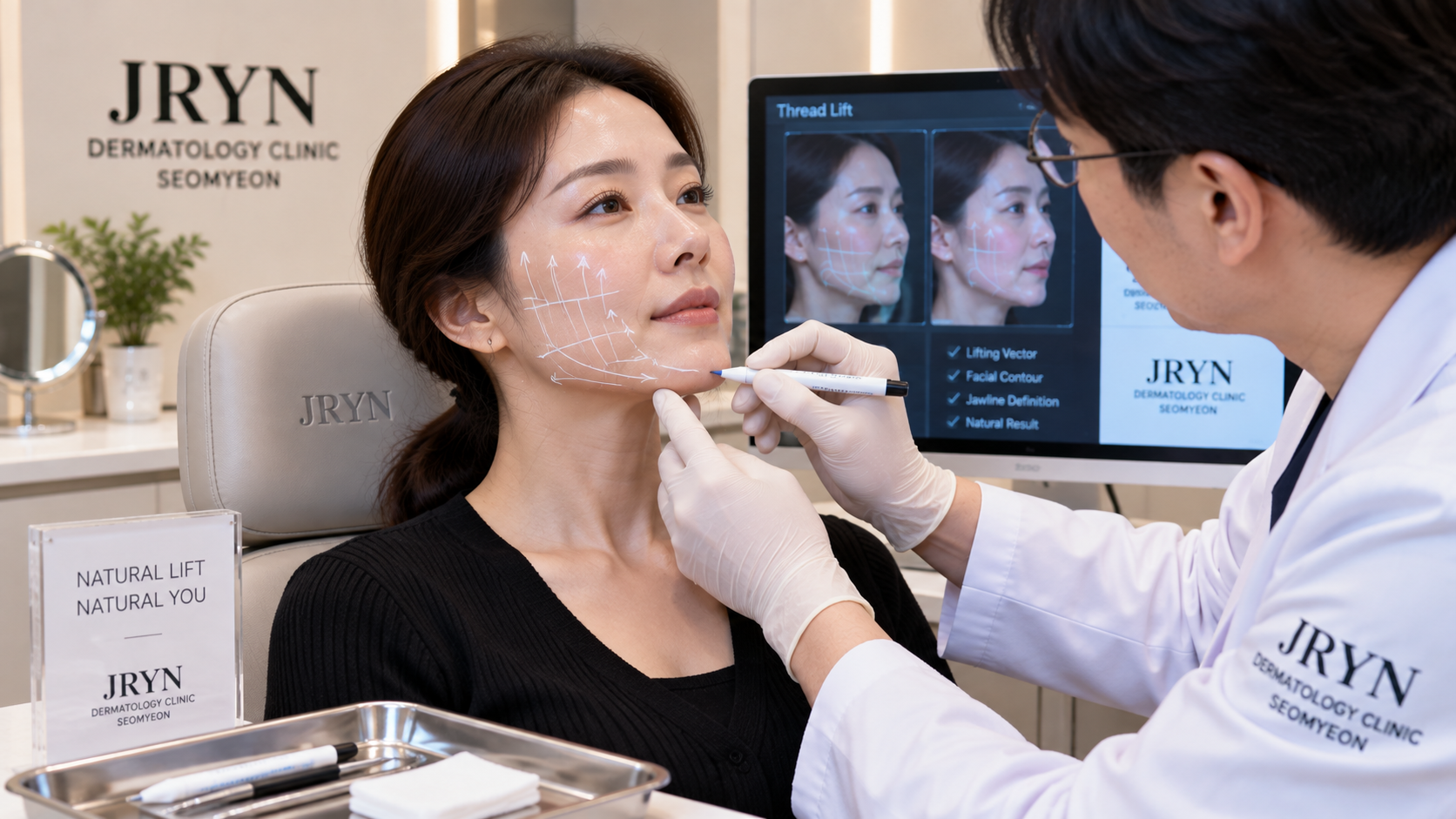
Thread Lift is a minimally invasive lifting approach that can be planned to refine facial contour and support areas affected by visible laxity. At JRYN, thread treatment is individualized around facial structure, skin condition, lifting direction and treatment goals.
Thread Lift is a minimally invasive aesthetic treatment in which threads are placed beneath the skin according to a planned treatment design. The approach may be considered when visible laxity and facial contour refinement are important treatment goals.
Thread type, treatment area, placement strategy and suitability should be determined through individual medical assessment.
Thread lifting is not simply about pulling the skin upward. A treatment plan considers where support is needed, the direction of the desired contour and the relationship between the treated area and the rest of the face.
The appropriate thread approach depends on the treatment area, skin condition and treatment goals.
Placement is planned around the desired contour and natural direction of facial support.
The treatment area is considered in relation to surrounding facial structures for balanced refinement.
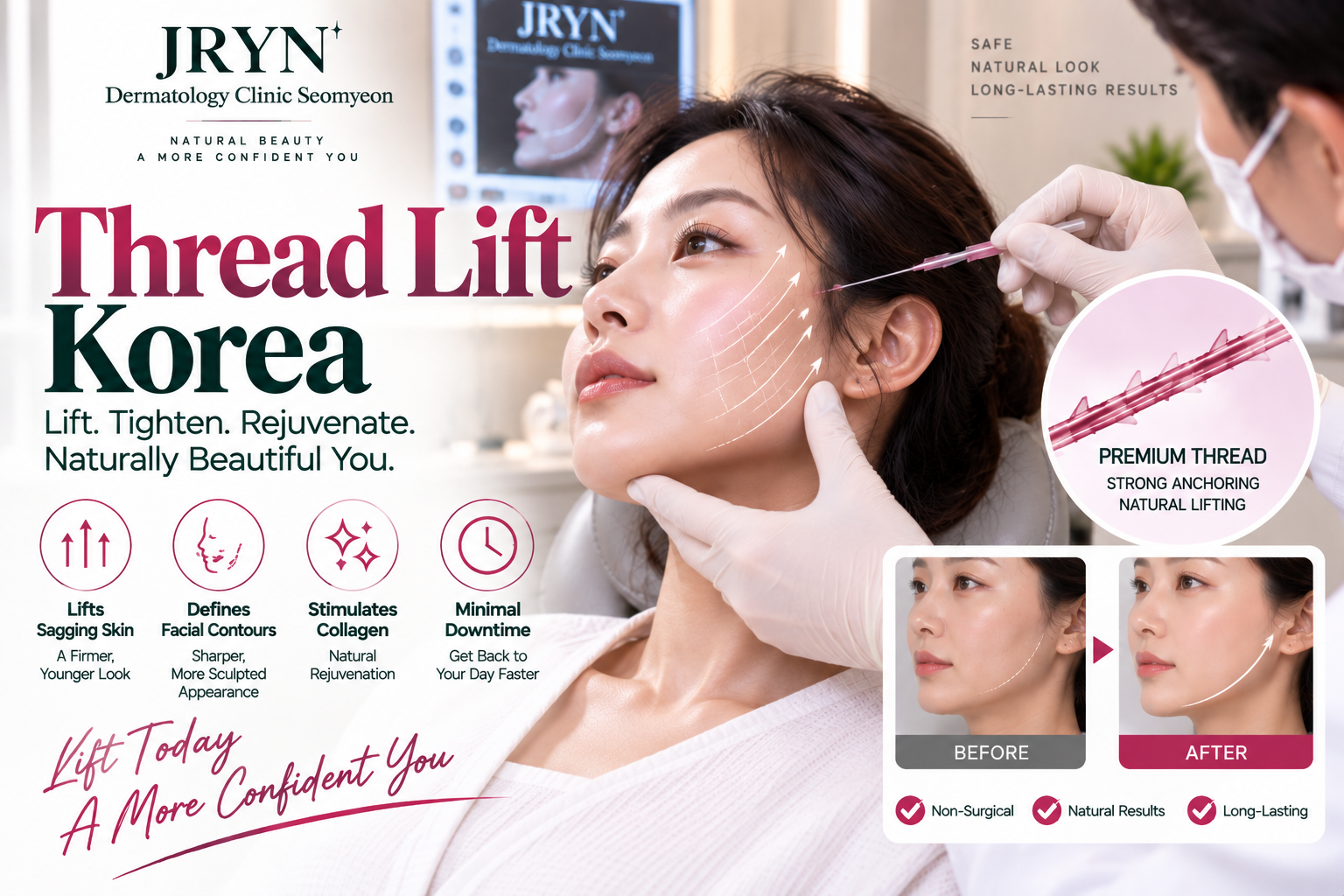
Thread Lift can be considered when more direct support and contour refinement are appropriate. The treatment design should reflect the patient's facial structure, degree of laxity and desired level of change.
The overall facial outline may become less distinct as elasticity and support gradually change.
Sagging around the cheeks, mid-face or lower face may become more noticeable over time.
Changes in lower-face support can make the jawline appear less clearly defined.
Reduced elasticity may contribute to a heavier or less refreshed overall appearance.
Skin may gradually feel less firm as its natural elasticity changes.
Some patients may prefer a thread-based approach when non-surgical energy treatments alone are not their preferred option.
Facial structure, skin condition, elasticity and areas of visible laxity are reviewed first.
Treatment areas and desired lifting directions are planned according to the individual facial contour.
Thread type and treatment strategy are selected based on the patient's condition and intended treatment area.
Thread placement follows the treatment plan and is performed with attention to facial anatomy and balance.
Thread placement may be planned to address visible laxity and refine the contour of the cheek and mid-face.
Lower-face treatment may focus on improving the definition and transition of the jawline.
Treatment planning can consider areas where sagging contributes to a heavier lower-face impression.
Thread placement should be considered in relation to surrounding structures rather than treating one area in isolation.
Those who notice visible facial laxity and want a more defined contour.
Those concerned about softer cheek or mid-face contours as elasticity changes.
Those who feel their jawline has become less clearly defined.
Those considering a minimally invasive lifting approach rather than surgical facelift surgery.
Those who want treatment planning based on their individual facial structure.
Suitability, thread type, placement and treatment plan should be determined through medical consultation.
Your facial structure, skin condition, elasticity and treatment concerns are assessed.
The treatment area, lifting direction and appropriate thread strategy are planned.
The selected treatment is performed according to the individualized treatment design.
Your response can be reviewed and further care can be planned appropriately when needed.
Thread Lift is a minimally invasive aesthetic lifting approach that uses medical threads placed beneath the skin to support selected areas and refine facial contour. At JRYN Seomyeon Dermatology Clinic in Busan, thread lifting is approached according to each patient's facial structure, skin condition, elasticity and individual treatment goals.
Thread Lift is different from energy-based lifting treatments. Rather than relying only on energy delivery, thread treatment involves a planned placement strategy beneath the skin. The treatment area, thread approach and lifting direction therefore need to be determined through individual assessment.
Thread Lift may be considered for visible laxity around areas such as the cheeks, mid-face or jawline. Depending on the patient's condition, the treatment plan may focus on a specific contour or consider several connected areas to maintain facial balance.
At JRYN, the goal is not simply to create a stronger pull. The treatment plan considers the direction of support and the natural proportions of the face. Thread type, placement, treatment area and suitability vary between patients and should be determined during an individual medical consultation.