
01
★★★★★
“It was my first visit, and the staff were incredibly friendly. The clinic was clean, and the treatment was carried out with care and attention. I was very satisfied with the experience.”
Angela Park
Google Review
G
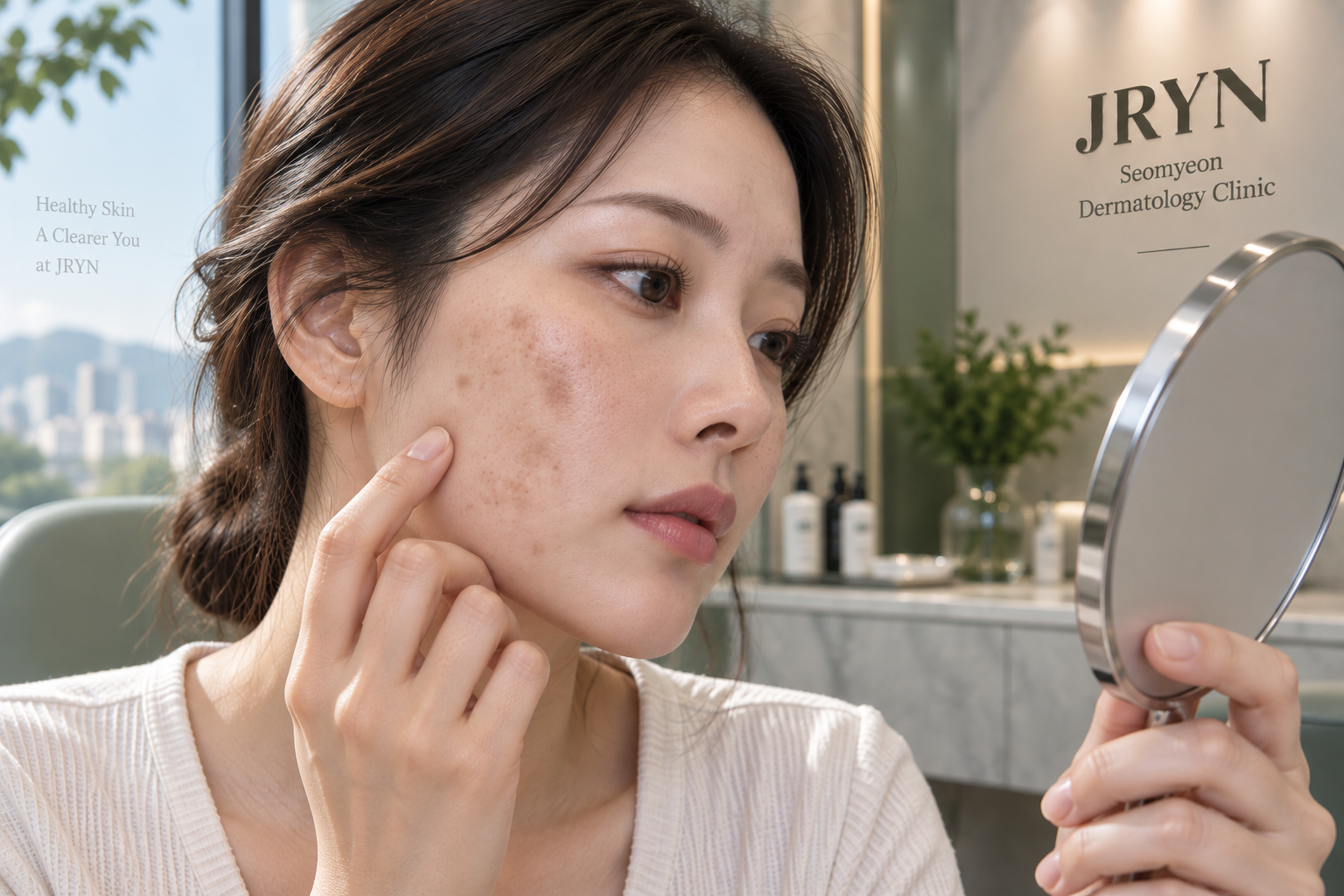
Post-inflammatory hyperpigmentation care begins with understanding the visible pigment pattern, overall skin tone and current skin condition before planning an individualized approach.
Post-inflammatory hyperpigmentation can leave visible areas of darker pigmentation after skin inflammation or irritation, affecting the overall evenness of the complexion. At JRYN, pigmentation care considers skin condition, tone and the visible pattern of pigmentation before an individualized treatment plan is created.
Post-inflammatory hyperpigmentation care centered on pigment pattern, distribution and current skin condition.
Post-inflammatory hyperpigmentation refers to areas of increased pigmentation that can remain after inflammation, acne or other irritation has affected the skin. The appearance can vary depending on the location, depth and individual skin condition.
Rather than treating every pigmentation concern in the same way, thoughtful planning starts with understanding the visible pigment pattern, surrounding skin tone, sensitivity and treatment area. JRYN's skin laser approach emphasizes care tailored to the individual's skin condition.
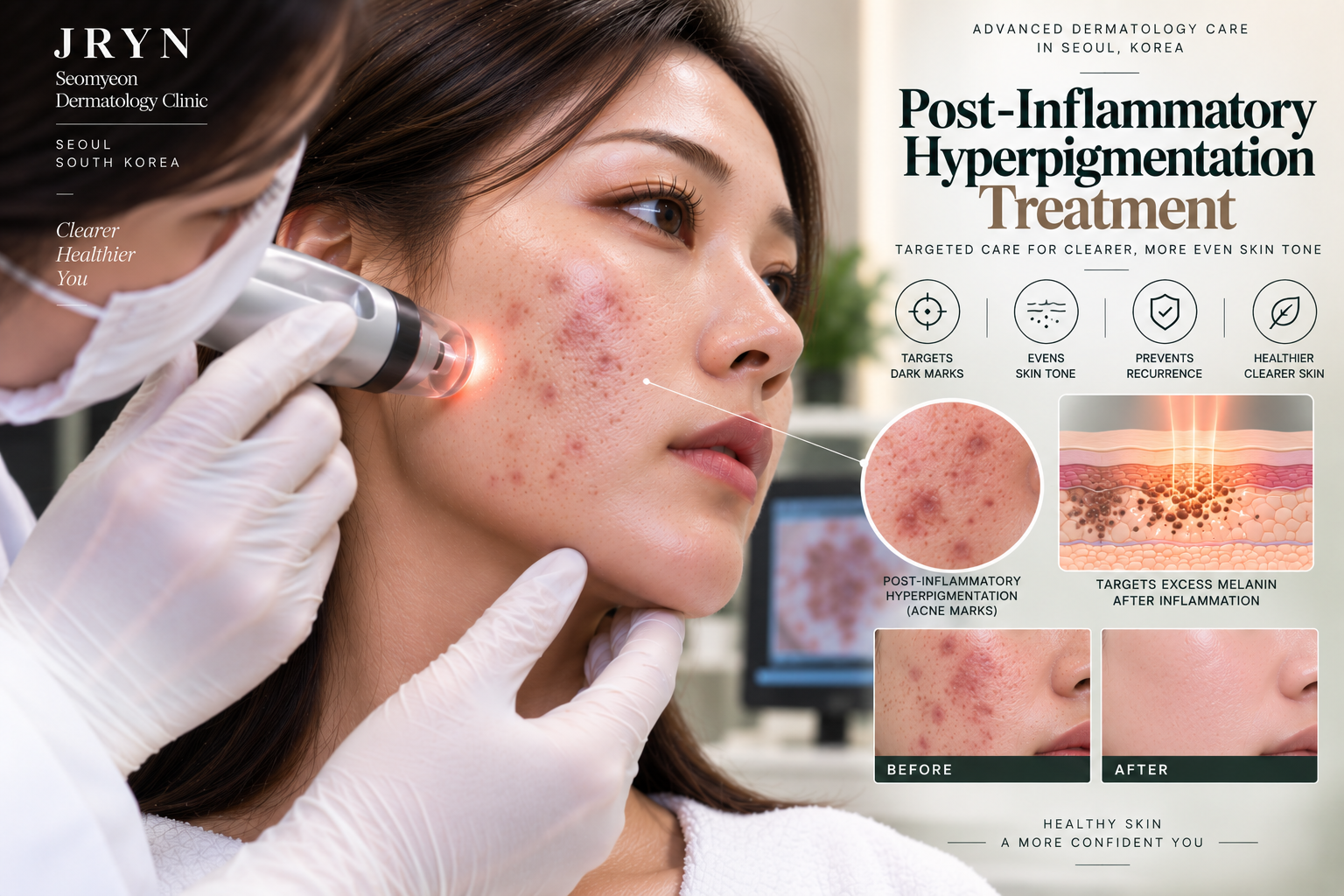
Post-inflammatory pigmentation can differ in appearance, distribution and intensity. A focused assessment helps identify the areas of concern and provides a more appropriate foundation for individualized pigmentation and brightening care.
The visible pattern, density and distribution of post-inflammatory pigmentation are reviewed.
The appearance and location of visible pigmentation are considered before treatment planning.
Current tone, texture and sensitivity are considered alongside the pigmentation concern.
The specific areas of concern are identified for a more individualized treatment plan.
Discuss visible pigmentation, skin concerns and individual treatment goals.
Review pigmentation pattern, pigment characteristics and overall skin condition.
Select a care approach according to the skin condition, pigment concern and treatment area.
Proceed with the planned pigmentation-focused care and appropriate follow-up guidance.
Post-inflammatory hyperpigmentation can create visible areas of darker pigmentation that make the complexion look less even. Treatment planning at JRYN Dermatology Clinic Seomyeon begins with understanding the patient's pigment pattern, skin tone, skin condition and specific areas of concern.
JRYN's skin laser approach considers pigmentation, tone and texture together with the condition of the skin rather than treating every pigmentation concern with one identical method. An individualized assessment helps establish appropriate treatment priorities.
For patients considering post-inflammatory hyperpigmentation treatment in Seomyeon, Busan, consultation provides an opportunity to discuss visible pigment, skin condition and suitable treatment priorities. Treatment selection should be determined after professional evaluation of the individual's skin.